Similarity and Source Review
Plagiarism Checker with PDF Report
WordBinary is a plagiarism checker and similarity checker for students, researchers, teachers and institutions. It identifies textual overlap, presents matched sources and contribution information, and produces a downloadable PDF report for contextual originality review.
What Is a Plagiarism Checker?
A plagiarism checker compares submitted writing with available web, publication and authorised repository content to identify textual similarity. Similarity is evidence for review and does not automatically establish plagiarism or misconduct.
Similarity Score vs Plagiarism
A similarity percentage measures detected overlap. Correct quotations, references, common language and properly cited material can contribute to similarity, so the score must be interpreted with the highlighted text and source context.
Plagiarism Report with Sources and Highlights
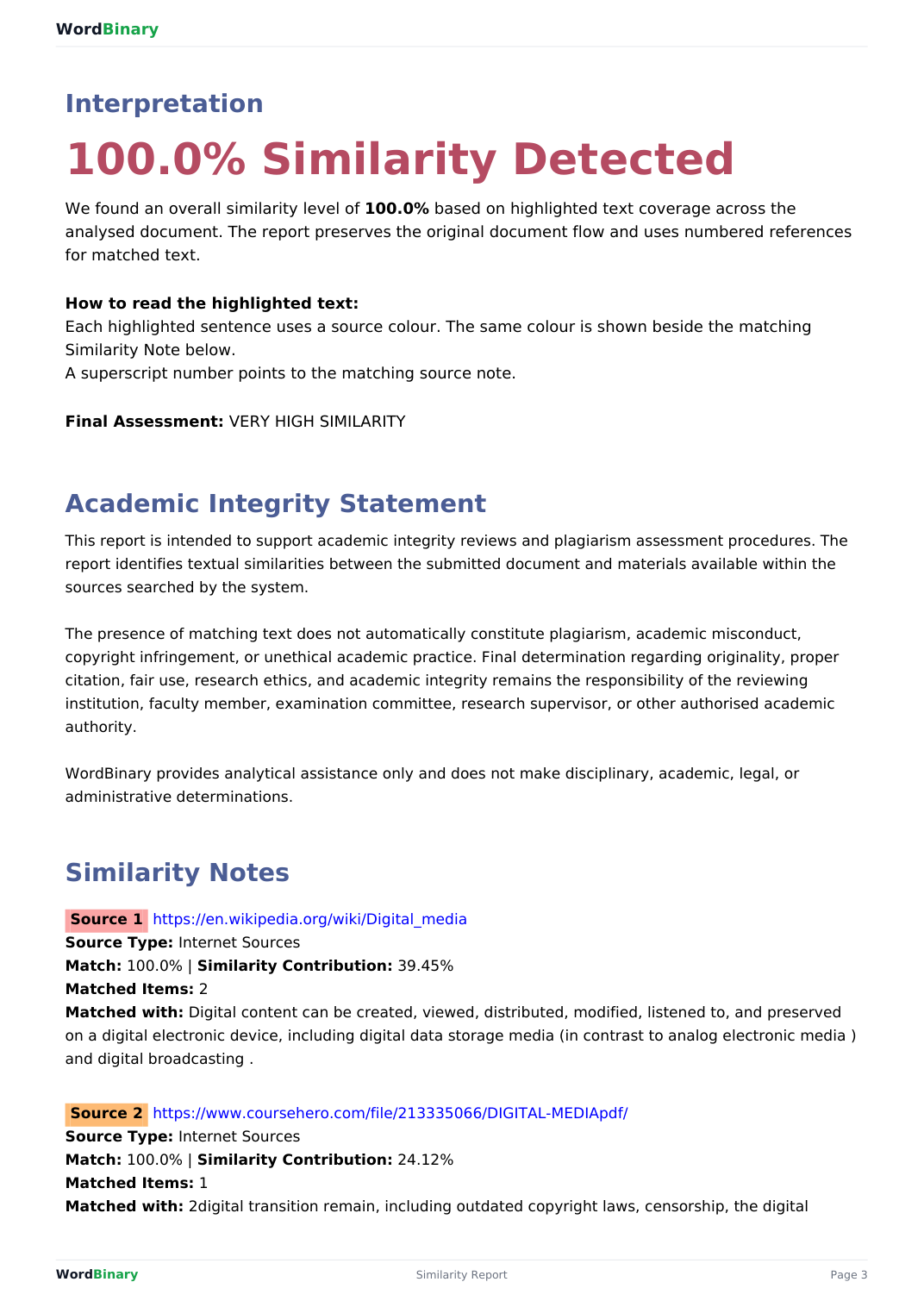
The report presents highlighted matches, source information and similarity contribution so reviewers can distinguish concentrated overlap from smaller matches across several sources.
Within-Document Similarity and Citation Review
WordBinary can report repeated material within the submitted document and provide citation and reference validation signals. These checks support review but do not replace manual verification of citation style or source accuracy.
Repository Checks, Languages and Formats
Repository comparison is available only where authorised. WordBinary supports multiple document formats and multilingual plagiarism workflows, with available options depending on the selected account and check configuration.
How source matching is evaluated
WordBinary searches available internet, publication and authorised repository sources according to the selected scan configuration. Candidate text is compared with the submitted document, qualifying overlap is connected to source information and contribution is calculated from the accepted highlighted coverage. Source availability, access restrictions and scan mode can affect the sources returned.
Similarity, citation and originality are different
A similarity score can include quotations, references, standard terminology, legislation, templates and correctly cited material. Conversely, a low score does not prove that every idea is original or correctly referenced. Reviewers should inspect the longest matches, source concentration, quotation marks, in-text citations, bibliography entries and paraphrases before interpreting the result.
Multilingual and institutional workflows
The plagiarism workflow supports English and a broad range of international and Indian regional languages. Text extraction quality remains important, especially for scanned PDFs and legacy-font documents that require OCR. Authorised institutional repositories can extend comparison coverage without changing the need for human source review.
See a WordBinary report example
The example below shows the type of evidence available for review. Scores and findings depend on the submitted document, selected workflow, source availability and account configuration.
Related WordBinary Pages
Frequently Asked Questions
Is a similarity score proof of plagiarism?
No. The score identifies textual overlap and must be reviewed with citations, quotations, references and academic context.
Does the report show matched sources?
Yes. The plagiarism report presents available source information and highlighted matching text.
Can references and quotations be excluded?
The upload workflow provides exclusion controls where supported, and the applied settings are recorded in the report.
Can institutions use repository matching?
Yes, where repository access has been explicitly enabled and configured for the relevant institutional workflow.